All content on this site is intended for healthcare professionals only. By acknowledging this message and accessing the information on this website you are confirming that you are a healthcare professional.
The PsOPsA Hub website uses a third-party service provided by Google that dynamically translates web content. Translations are machine generated, so may not be an exact or complete translation, and the PsOPsA Hub cannot guarantee the accuracy of translated content. The PsOPsA Hub and its employees will not be liable for any direct, indirect, or consequential damages (even if foreseeable) resulting from use of the Google Translate feature. For further support with Google Translate, visit Google Translate Help.


The PsOPsA Hub is an independent medical education platform. This activity is supported by an educational grant from Lilly. Funders are allowed no direct influence on our content.
Now you can support HCPs in making informed decisions for their patients
Your contribution helps us continuously deliver expertly curated content to HCPs worldwide. You will also have the opportunity to make a content suggestion for consideration and receive updates on the impact contributions are making to our content.
Find out more
Create an account to access:
Bookmark & personalize site content
Receive alerts for new content in your areas of interest
View psoriasis and psoriatic arthritis content recommended for you
EC approves deucravacitinib for adults with active PsA
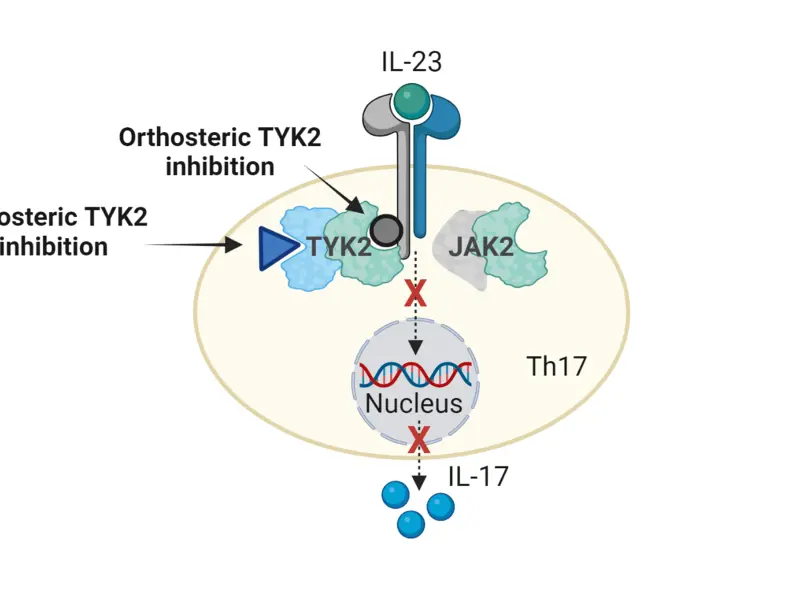
On May 8, 2026, the European Commission (EC) approved deucravacitinib, alone or in combination with methotrexate, for the treatment of adults with active psoriatic arthritis (PsA) who are intolerant to, or have had an inadequate response to, a prior disease-modifying antirheumatic drug (DMARD).1 Deucravacitinib is the first tyrosine kinase 2 (TYK2) inhibitor approved for this indication.1
Approval was based on results from the phase III POETYK PsA-1 (NCT04908202) and POETYK PsA-2 (NCT04908189) studies, which demonstrated that a higher proportion of patients achieved a minimal disease activity (MDA) response (pooled p < 0.0001), disease activity in psoriatic arthritis (DAPSA) low disease activity or remission (pooled p < 0.0001), DAPSA disease remission (pooled p < 0.0001), a psoriatic arthritis response criteria (PsARC) response (pooled p < 0.0001), and an improved psoriatic arthritis disease activity score (PASDAS; pooled p < 0.0001) at Week 16.1,2 The most common adverse reactions were upper respiratory infections, blood creatine phosphokinase increase, herpes simplex infections, oral ulcers, acneiform rash, and folliculitis.1
References
Please indicate your level of agreement with the following statements:
The content was clear and easy to understand
The content addressed the learning objectives
The content was relevant to my practice
I will change my clinical practice as a result of this content
This content is accurate as of the date of publication and is not updated retrospectively. Please refer to the latest available evidence, guidelines, and relevant regulatory information when making clinical decisions.
.webp)